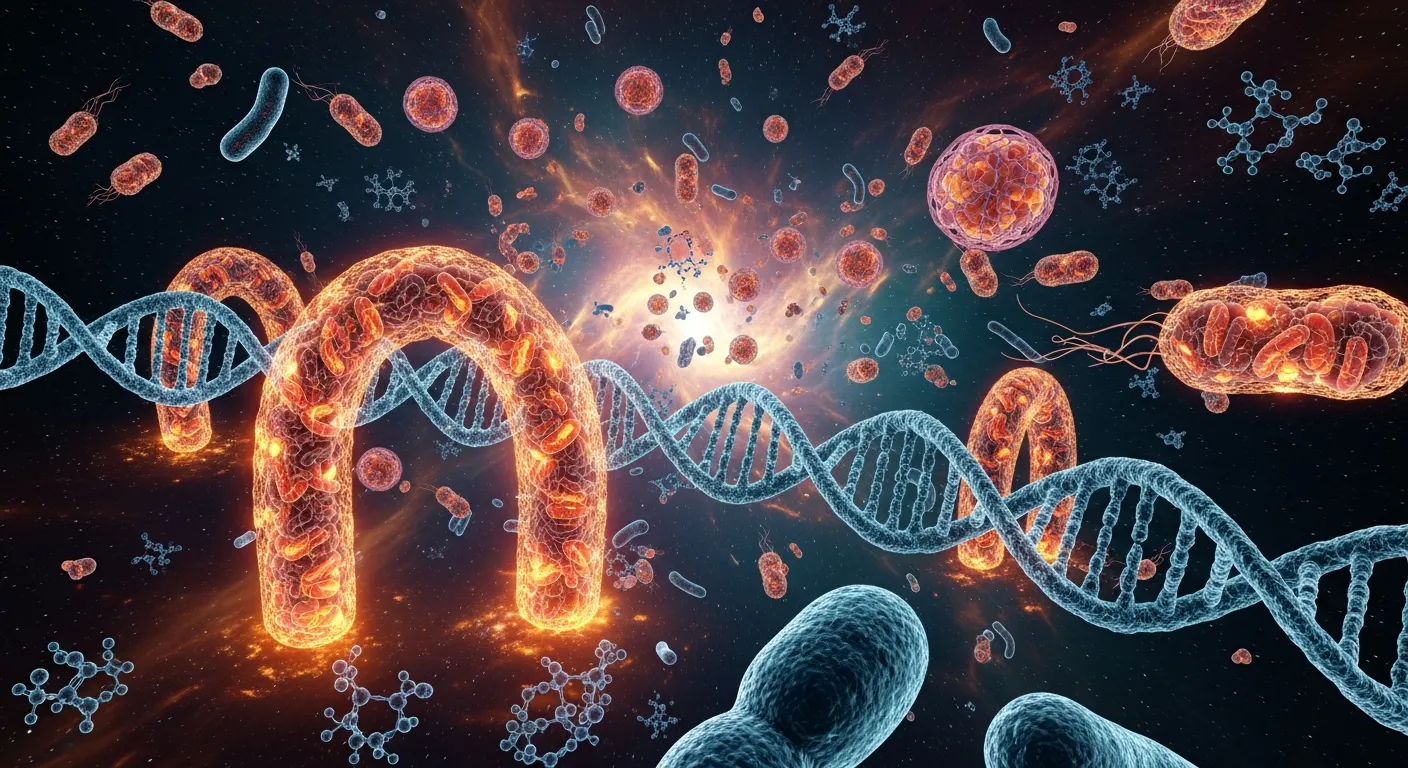

Your gut has been hiding a secret from you. And it's kind of a big deal.
For 30 years, scientists knew something weird was going on. They knew there was a micronutrient, something your body desperately needs but can't make itself. They knew it came from your gut bacteria. They knew it protected your brain, boosted memory, helped you handle stress, and even fought cancer.
But they had absolutely no idea how it actually got from your intestines into your cells.
Like trying to find a ghost in a crowded room.
That all changed this month. A team of international researchers finally cracked it. They found the molecular doorway, the missing transporter gene called SLC35F2. It's literally the key that unlocks this super-nutrient and lets it flow into your cells.
Meet Queuosine (Try Saying That Five Times Fast)
The nutrient in question is called queuosine, pronounced "cue-o-scene." And yes, it sounds like something from a sci-fi movie.
Discovered back in the 1970s, queuosine spent decades being overlooked, like a quiet genius sitting in the back of the classroom. But quietly, it was doing incredible things. It fine-tunes how your body reads your genes, helping your cells translate DNA into proteins accurately. Think of it as a proofreader for your body's instruction manual.
"It's like a nutrient that fine-tunes how your body reads your genes," says Valérie de Crécy-Lagard, one of the lead researchers from the University of Florida. "The idea that this small compound, which people have barely heard of, plays such an important role, is fascinating."
Your Gut Is Basically a Pharmacy
Here's where it gets wild. Your body can't make queuosine. Zero. Zip. Nada.
Instead, it comes from two sources: certain foods (tomatoes, wheat, and some dairy products have it) and, more importantly, the trillions of bacteria living in your gut. Those microscopic roommates? They're cooking up nutrients you literally cannot live well without.
"We have known for a long time that queuosine influences critical processes like brain health, metabolic regulation, cancer and even responses to stress," says Vincent Kelly from Trinity College Dublin, another senior researcher on the project. "But until now we haven't known how it is salvaged from the gut and distributed to the billions of human cells that take it in."
Why This Discovery Actually Matters
Okay, so they found a gene. Big deal, right?
Actually, yeah. It's a huge deal.
For starters, SLC35F2 wasn't just sitting there doing nothing. Scientists already knew about it because it's the same doorway that some viruses and cancer drugs use to sneak into cells. Now that they understand its normal function, they can start figuring out how to use it.
The implications are massive:
- Better brain health: Queuosine is linked to memory and learning. Understanding how it gets into cells could lead to new approaches for cognitive support.
- Cancer defense: The nutrient has been shown to suppress tumor growth.
- Stress response: It helps regulate how your body handles stress hormones.
- Personalized nutrition: This could explain why some people thrive on certain diets while others don't. Gut bacteria vary wildly from person to person.
The Microbiome Strikes Again
If there's one takeaway from all the health research of the past decade, it's this: your gut microbiome is way more powerful than we ever imagined.
These bacteria don't just help you digest food. They manufacture vitamins, regulate your immune system, influence your mood, and now we know they produce a rare nutrient that fine-tunes your gene expression.
"This discovery opens up a whole new chapter in understanding how the microbiome and our diet can influence the translation of our genes," says de Crécy-Lagard.
Translation: the food you eat and the bugs in your gut are literally helping write the story of your health at the genetic level.
What You Can Actually Do With This Info
Let's be real. You can't go out and buy queuosine supplements. They don't exist yet.
But the foods that contain it are pretty accessible: tomatoes, wheat products, and certain dairy foods all have it. And keeping your gut bacteria happy? That's something you can work on right now. Fermented foods, fiber-rich plants, and avoiding unnecessary antibiotics all help maintain a diverse microbiome.
Because those little bacterial factories in your gut? They're working overtime to keep you healthy. And now, thanks to this discovery, science finally understands how their most mysterious product gets where it needs to go.
Sometimes the biggest breakthroughs aren't about inventing something new. They're about finally understanding what was there all along.
Published in the Proceedings of the National Academy of Sciences, this research was a collaboration between the University of Florida, Trinity College Dublin, San Diego State University, Ohio State University, and institutions across Ireland and Northern Ireland.