
Every now and then medicine drops a story so wild it sounds like a lost episode of a sci-fi show. This is one of those stories.
In Delhi, doctors at AIIMS performed a rare operation on a 17-year-old boy who had what is known as a parasitic twin, an underdeveloped twin attached to his body that depended entirely on him for survival. In this case, that meant an extra pelvis, legs, buttocks, and external genitalia protruding from his abdomen and chest area. Yes, this was real. Yes, the extra limbs could reportedly feel pain, touch, and temperature. And yes, the surgery actually worked.
That is the kind of sentence that makes your brain stop, reverse, and ask for a replay.
Quick reality checkDoctors say fewer than 1 in 100,000 births involve a parasitic twin, and only a tiny fraction of those cases are documented in detail. This was not routine surgery. This was the medical equivalent of solving a puzzle where the pieces are made of arteries, nerves, and nerves attached to more arteries.
According to the BBC, the surgical team first had to figure out exactly how connected the parasitic twin was to the teenager’s body. That sounds obvious, but this was the whole game. If vital organs were deeply shared, the risk would skyrocket. Scans showed that the parasitic twin was attached to the teen’s breastbone and supplied blood through a vessel in his chest, but there was not major shared dependence with organs like the liver or kidneys. That changed everything.
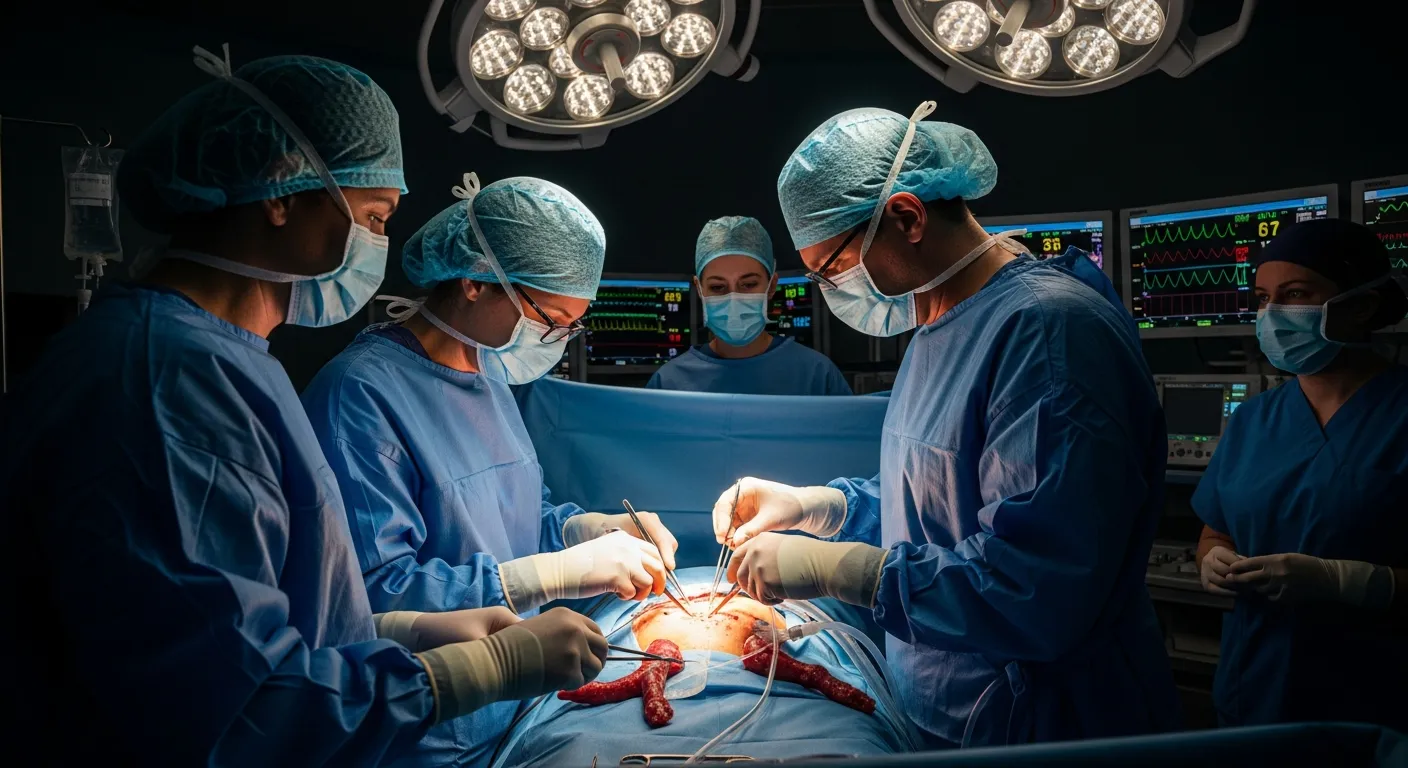
The surgeons then tackled the case in two stages. First, they removed the attached parasitic twin structures. Then they extracted a large cystic mass from the boy’s abdomen. During the procedure, his blood pressure dropped sharply because a huge share of his blood flow had been going to the attached twin. The team stabilized him, completed the operation in about two-and-a-half hours, and the teenager was discharged just a few days later.
Honestly, the medicine here is astonishing, but the human part hits even harder.
The boy had reportedly dealt with staring, ridicule, isolation, and the kind of daily social cruelty that can make the world feel a lot smaller than it is. After surgery, he described it as a new world opening up. That might be the most powerful part of the whole story. This was not just about removing tissue. It was about handing someone their life back.
If you are wondering what a parasitic twin actually is, here is the short version: identical twins begin developing together, but one stops developing properly and remains physically attached to the other. The more developed twin is called the autosite. The underdeveloped one survives only because it is connected. Biology can be elegant, but sometimes it is also deeply, gloriously strange.
Also, can we take a second to appreciate the calmness of surgeons? Imagine walking into work and your day is: “Good morning everyone, today we are attempting one of the rarest procedures in medical literature.” No pressure. Just anatomy, intuition, teamwork, and a very steady pair of hands.
What makes this story perfect Shuffle Curiosity material is that it sits right at the border between unbelievable and true. It has the shock factor of a myth, the emotional weight of a coming-of-age story, and the brain-melting reminder that the human body is still capable of surprising us in ways no screenwriter would dare pitch without getting laughed out of the room.
Medicine is often presented as cold charts, lab coats, and polite diagrams. Then a story like this barges in and reminds you that the real world is much weirder than fiction. Sometimes the weirdness is heartbreaking. Sometimes it is miraculous. Sometimes, somehow, it is both.
And in this case, it ended with a teenager getting a real shot at a different life. That is not just fascinating. That is beautiful.
Source: BBC reporting on the AIIMS Delhi surgery, February 2025.