
The Cosmic Glutton With No Sun to Call Home
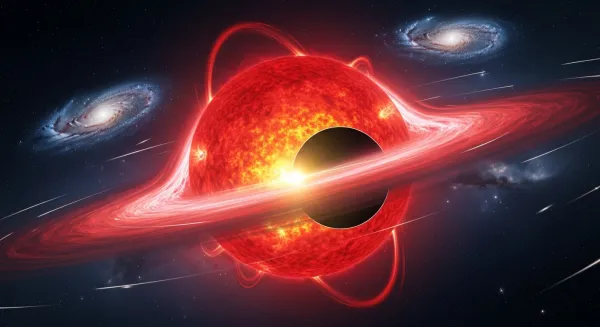
Somewhere in the constellation Chamaeleon, about 620 light-years from Earth, a planet is having the ultimate growth spurt. It is devouring six billion tonnes of gas and dust every single second. To put that in perspective, that is roughly the mass of Mount Everest being swallowed whole every second, all day, every day.
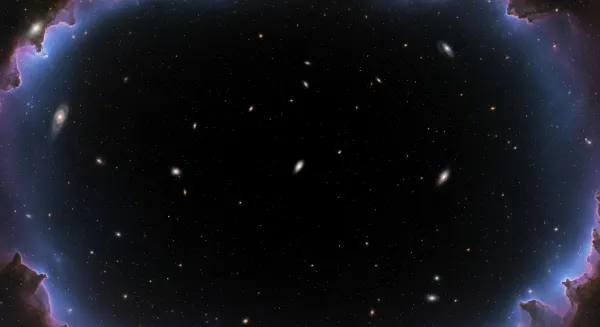
Here is the wildest part: this planet has no star. No sun to orbit. No cozy solar system to call home. It is a rogue planet, wandering the darkness of interstellar space completely alone, and it is currently experiencing the strongest accretion episode ever recorded for any planet in the universe.
What Even Is a Rogue Planet?
Rogue planets, also called free-floating planets, are objects that form like planets but do not orbit stars. They either got ejected from their birth systems through gravitational chaos, or they formed directly from collapsing gas clouds like stars do, just without ever igniting. Scientists are not entirely sure which.
The one causing all this excitement is named Cha 1107-7626, and it is between five and ten times the mass of Jupiter. For years, astronomers have known it was out there, slowly feeding on a surrounding disk of gas and dust. But in late 2024, something dramatic happened. The planet suddenly started eating eight times faster than before.
This is the first time anyone has witnessed such a massive feeding frenzy on a planetary object. Usually, accretion bursts like this are only seen in young stars. The fact that Cha 1107-7626 can do it suggests that rogue planets might be far more star-like than we ever imagined.
The Discovery That Blurs Lines
The discovery was made by a team using the X-shooter spectrograph on the European Southern Observatory Very Large Telescope in Chile, combined with data from the James Webb Space Telescope. What they found challenges everything we thought we knew about the boundary between stars and planets.
During the accretion burst, the planet surrounding disk showed something never before seen in a planetary object: water vapor. This chemical signature had only ever been spotted during stellar accretion bursts. Combined with magnetic activity driving the infall, it suggests rogue planets like this one might form through similar mechanisms as stars.
As lead author Victor Almendros-Abad put it: "People may think of planets as quiet and stable worlds, but with this discovery we see that planetary-mass objects freely floating in space can be exciting places."
Imagine Being There
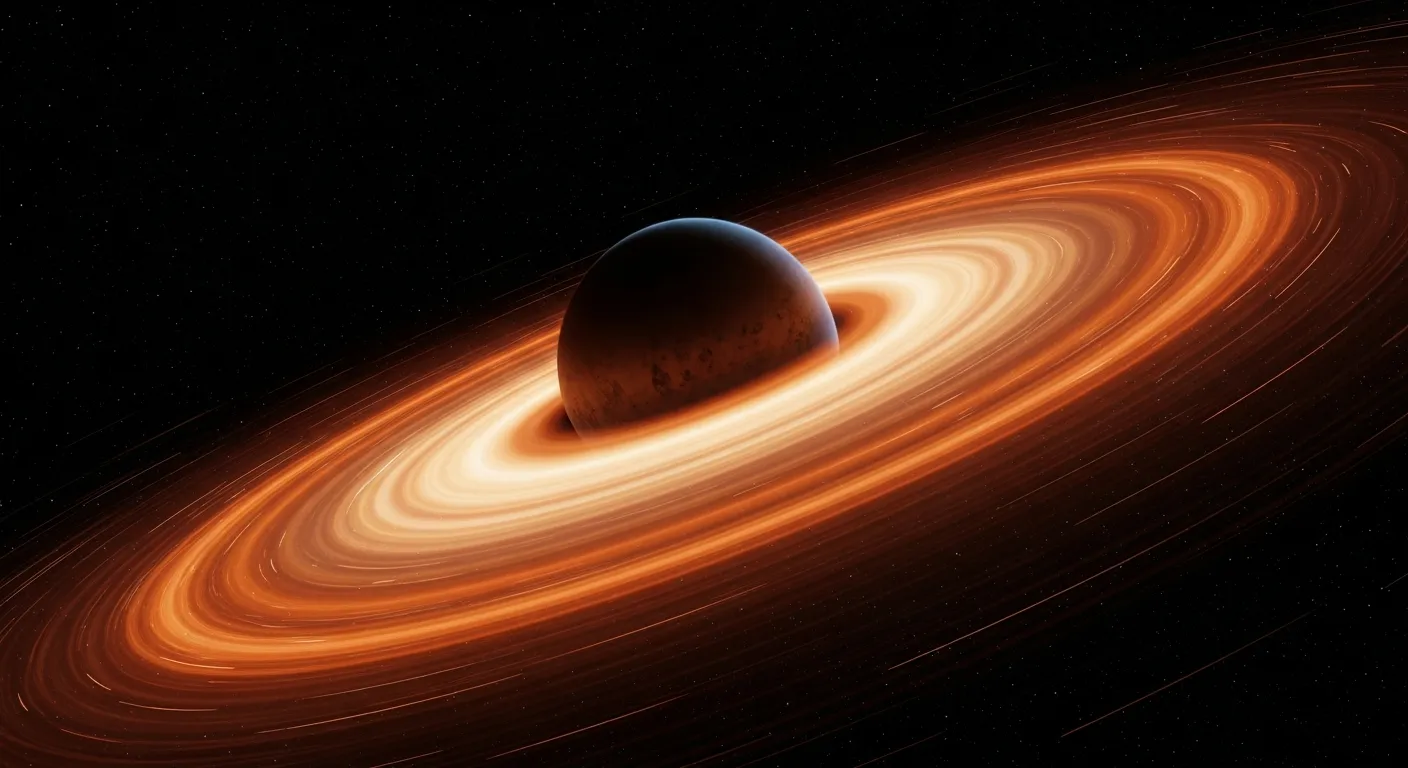
Picture this scene. No sun rises or sets. No warmth bathes the surface. Just endless darkness punctuated by distant stars. And in the middle of that void, a world ten times heavier than Jupiter glows with the heat of its own gluttony. An orange-red disk of swirling gas spirals into it like water down a cosmic drain.
There might be no life there. Probably not, given the radiation and lack of starlight. But somewhere in that darkness, chemistry is happening. Molecules are forming. Elements are mixing. And a world is growing, feeding, existing in the loneliest possible way.
It makes you wonder. How many rogue planets are out there in the darkness between stars? Estimates suggest there could be billions of them wandering our galaxy alone. Some might even harbor subsurface oceans, warmed by their own internal heat, completely independent of any star.
The Questions We Cannot Answer
This discovery raises profound questions. If rogue planets can behave like stars, where exactly is the line between the two? Is a failed star just a very massive planet, or is a small rogue planet just a very tiny failed star? The universe, as always, refuses to fit neatly into our categories.
Cha 1107-7626 will keep growing for millions of years. Eventually, it might lose its accretion disk and cool down, becoming a dark wanderer in the void. Or it might get captured by a passing star system, suddenly finding itself with a sun after all those lonely years.
Somewhere out there, right now, six billion tonnes of matter vanishes into this cosmic maw every second. No one would know if we were not looking. No one would care if we did not wonder. And that, perhaps, is the most beautiful part of all.