
In Nepal, a 10-Inch Needle Through the Tongue Is How You Ring In the New Year
Most of us welcome the New Year with champagne, fireworks, and a vague promise to hit the gym. In Bode, Nepal, they do things a little differently. Here, a 30-year-old man named Sujan Bagh Shrestha just celebrated 2082 by letting someone drive a 10-inch iron needle straight through his tongue. And he did it on purpose.
Welcome to Jibro Chedne Jatra, one of the most jaw-dropping New Year traditions on Earth.
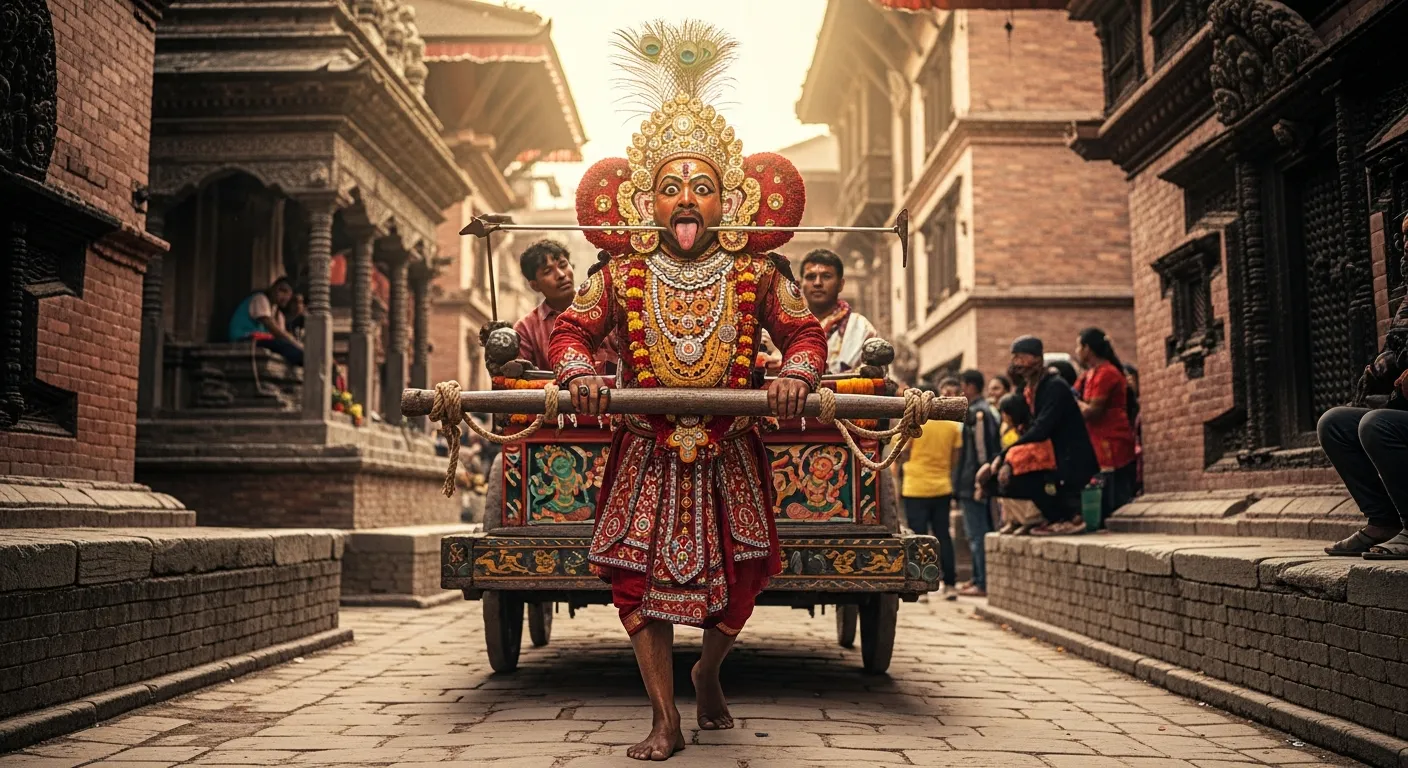
Every April, on the second day of the Nepali New Year, the medieval town of Bode turns into a living fever dream. Crowds pack the narrow streets. Drums pound. Incense hangs thick in the air. And at the center of it all, a single volunteer stands before a gathering of priests, family, and thousands of curious onlookers, ready to have his tongue skewered with a needle the length of a dinner fork.
But this is not a stunt. It is a sacred ritual that has been performed for over a century, and the story behind it is straight out of a myth.
According to local legend, the town of Bode once suffered a devastating famine. Crops failed. People starved. Desperation hung over the valley like fog. So the king, Jagajyoti Malla, turned to a holy man for answers. The hierophant had a bizarre prescription. If a man took the form of the fierce deity Lord Bhairab and pierced his own tongue, it would appease the gods and protect the land from famine, floods, and disaster forever.
The king agreed. A man stepped forward. The needle went in. And somehow, the story goes, the famine ended.
That was over 110 years ago. The ritual has continued ever since.
The preparation alone sounds like something out of an endurance documentary. The chosen devotee enters a strict period of isolation days before the ceremony. No salt. No impure food. No contact with women. No leaving the town of Bode. He drinks only water and meditates, steeling himself for what is to come. The iron needle itself is soaked in mustard oil for four days to prevent rust and blessed before the ceremony.
Then comes the moment.
In front of a roaring crowd, the needle is pushed through the tongue. The devotee is then tied to a large wooden chariot, which he drags through the streets of Bode by the rope attached to the needle in his mouth. For hours, he processes through the town, blood dripping, eyes locked forward, completely silent. The crowd follows, chanting, praying, and filming with their phones.
It is horrifying. It is beautiful. It is unlike anything you will see on a Netflix travel show.
Sujan Bagh Shrestha, this year's devotee, is no stranger to the ritual. At 30 years old, this was his fourth consecutive year volunteering for the piercing. He comes from a family that treats this tradition like a sacred inheritance. His father, Buddha Krishna, endured the needle nine times. His uncle, Krishna Chandra, did it thirteen times. The all-time record holder in Bode's history reportedly pierced his tongue thirty-one times.
Only thirteen men have performed the ritual in the past 110 years of recorded history. That is how rare and demanding it is. Each one is seen not as a victim, but as a protector of the entire community. In Bode, a man with a needle through his tongue is a shield against the apocalypse.
The psychology of it is fascinating. In an age where a paper cut sends us running for a band-aid, these men willingly submit to extreme pain for the good of their neighbors. There is no prize money. No Instagram sponsorship. Just faith, duty, and the belief that one person's suffering can hold back the darkness for everyone else.
Jibro Chedne Jatra does not get the glossy travel magazine treatment that Everest or Kathmandu receives. It is too raw, too bloody, too real. But that is exactly why it matters. This is not performance art. It is not a haunted house. It is a living, breathing connection to a time when people believed that the physical body could be offered up in exchange for cosmic protection. And in a world that increasingly feels like it is spinning off its axis, there is something almost comforting about a town that still believes one man's sacrifice can keep the rest of them safe.
So the next time you complain about your New Year's Eve hangover, remember Sujan Bagh Shrestha. While you were nursing a headache, he was dragging a chariot through the streets of Nepal with a 10-inch needle through his tongue. And he will probably do it again next year.
Different strokes for different folks, I guess.