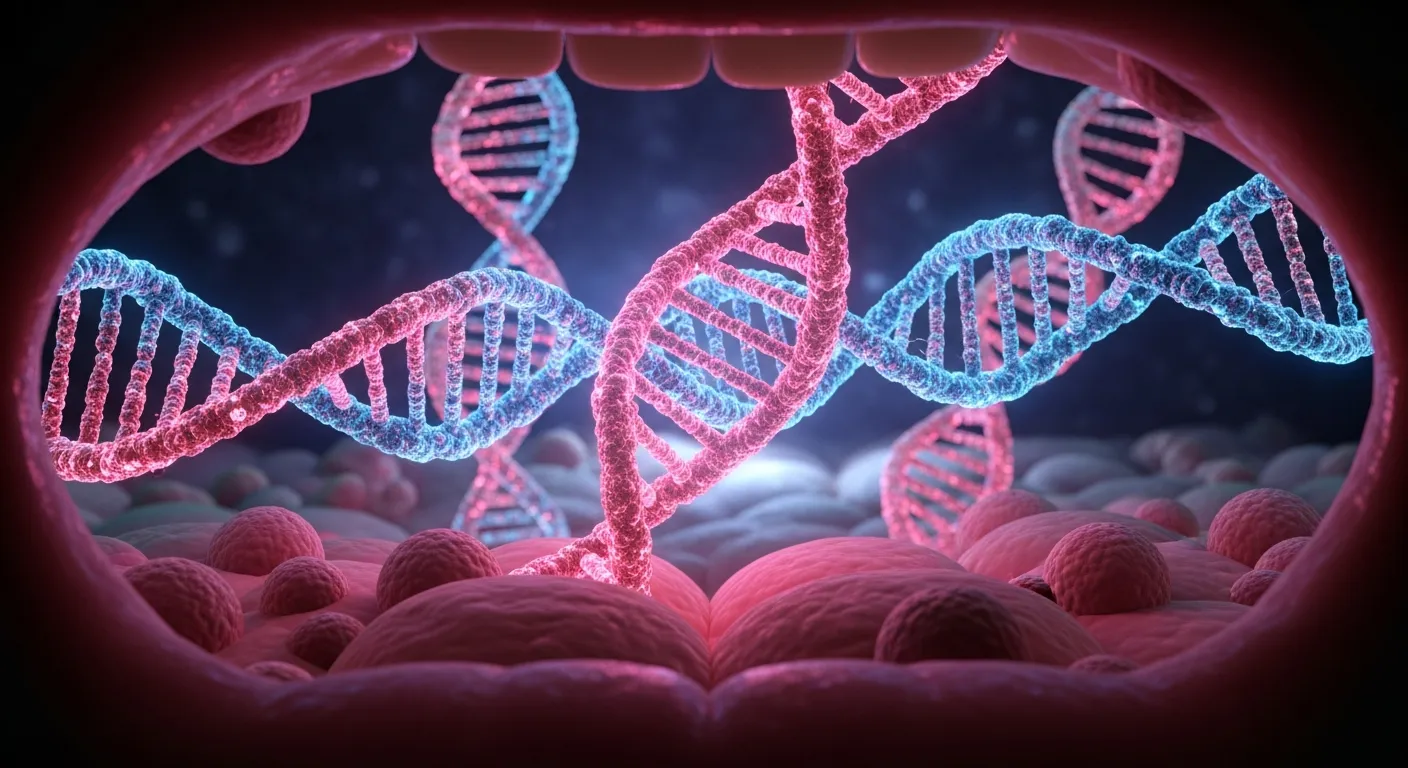

There is a giant blob of DNA hiding in your mouth right now. You cannot see it. You cannot feel it. Scientists did not even know it existed until last year.
Welcome to Inocles, the genetic discovery that proves we still do not fully know what is going on inside our own bodies.
Wait. What Is an Inocle?
Picture this. Researchers at the University of Tokyo were digging through saliva samples when they stumbled onto something ridiculous. A huge chunk of DNA floating around inside mouth bacteria, far bigger than the usual little bonus loops of DNA scientists expect to find.
That thing is Inocles. And here is the part that made me sit up straight: researchers think about 74% of humans may have it.
Wild fact card74% of people may be carrying giant hidden DNA in their mouthsNot in human cells. In the bacteria living there. Which somehow makes it even weirder.
These things are enormous by microbial standards, averaging around 350,000 base pairs. Regular plasmids, the extra DNA bits bacteria often carry, are usually much smaller. Inocles show up like someone smuggled an entire bonus chapter into a pamphlet.
How Did We Miss Something This Big?
This is the funniest part. We missed it because our tools were too good at chopping things up.
For years, DNA sequencing often relied on breaking genetic material into tiny fragments and reconstructing the story later. That works great for a lot of things. It works terribly when the thing you are trying to find is a giant genetic monster that gets shredded before anyone realizes it is special.
The breakthrough came when researchers used long-read sequencing and a method called preNuc to strip away human DNA from saliva samples first. Once the noise dropped, Inocles finally popped into view.
Which means this stuff may have been hanging out in millions and millions of mouths the whole time while science just walked past it like a detective missing the piano in the middle of the room.
Why This Is More Than a Cool Gross-Out Fact
Inocles are not just weird. They may actually matter.
Researchers think these giant DNA elements help oral bacteria survive the chaos of mouth life, with genes tied to stress resistance, DNA repair, and other survival tricks. Your mouth is a brutal place, after all. Heat, cold, sugar, acid, brushing, mouthwash, coffee, maybe an ill-advised midnight snack. Bacteria that live there need game plans.
Scientists are now investigating whether Inocles are linked to things like gum disease and cavities. There are also hints they could become useful markers for more serious conditions, including cancer.
That is the sort of sentence that makes a curiosity story suddenly feel important. Something giant, common, and previously invisible might turn out to be medically useful.
The Best Part Is How Incomplete This Story Still Is
Right now, researchers are still trying to answer the obvious questions. What exactly are Inocles doing? Can they move between people? Have they been with us for ages? Are they helpful, harmful, or just freeloading with excellent camouflage?
We do not know yet.
And honestly, that is what makes this such a perfect science story. It is not one of those tidy discoveries where everyone nods and goes home. It is the opposite. It blows open a door.
We love acting like the human body is fully mapped, fully cataloged, fully understood. Then suddenly a team looks at spit a little more carefully and finds giant hidden DNA in most of humanity.
Absolutely humbling.
Next Time You Brush Your Teeth...
Just remember that your mouth is not only home to bacteria. It might also be home to giant mystery DNA that science noticed embarrassingly late.
There is something delightful about that. Beneath all our apps, satellites, and smug confidence, biology can still jump out from behind a curtain and yell, “Surprise.”
And this time, the surprise was hiding in your spit.
Source: University of Tokyo research on giant extrachromosomal DNA elements called Inocles in the human oral microbiome.