
Your brain might be the world's most dedicated podcast listener -- and it does not even need you to be awake to enjoy the show.
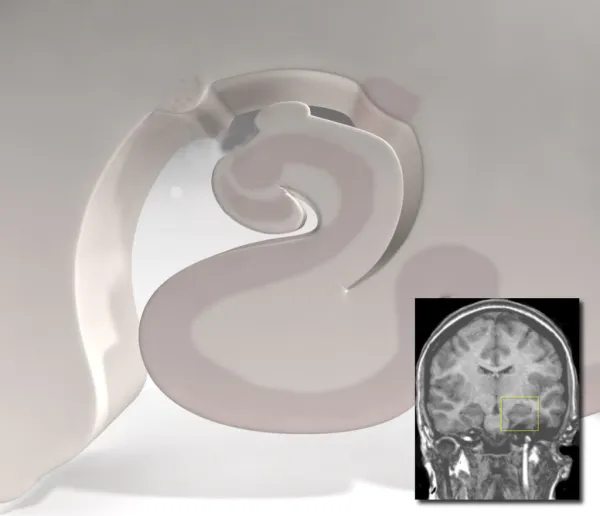
Here is the kind of discovery that quietly breaks something in your head. In a study published in Nature on May 18, 2026, researchers at Baylor College of Medicine took seven patients undergoing epilepsy surgery, put them under general anesthesia with propofol, and inserted thousand-sensor Neuropixel probes deep into their hippocampi. Then they hit play on The Moth Radio Hour.
The unconscious brain listened. Actually listened. It tracked grammar, parsed meaning, and predicted what words would come next. Not vague flickers of activity. Full-on narrative comprehension.
The experiment that should not have worked
General anesthesia is supposed to shut down higher cognition. That is literally the point. You are gone. No consciousness, no awareness, no understanding. Your auditory cortex might still register sounds, but the signal is believed to die before it reaches any region capable of meaning-making.
At least, that is what neuroscientists have assumed for decades.
Sameer Sheth and his team decided to test this assumption with unusual precision. Neuropixel probes -- thinner than a human hair, packed with over a thousand sensors -- were inserted into the hippocampus of fully anesthetized patients. Then they played sounds and watched what happened.
First came simple tones. Repetitive beeps with occasional oddball pitches. Within ten minutes, hippocampal neurons were learning to tell the oddballs apart from the standard tones. The unconscious brain was not just hearing. It was paying attention. It was learning.
Then came the podcast.
Your unconscious brain is a grammar nerd
This is where it gets genuinely wild. When researchers played 10-minute stories from The Moth, groups of hippocampal neurons responded to specific linguistic features. Some neurons perked up for uncommon words like "cosmos." Others tracked grammatical structure, responding differently to nouns, verbs, and adjectives.
The hippocampus also seemed to grasp semantic relationships. "Cat" and "dog" produced similar activity patterns because they are conceptually related. The brain was not just hearing individual words. It was making sense of them.
Most stunning: the hippocampus predicted upcoming words based on sentence context. Activity patterns matched what researchers normally see in awake brains during natural language processing. Your unconscious brain, knocked out cold by surgical anesthesia, was still trying to figure out what comes next in the story.
"We are always making predictions about what we are about to hear next," Sheth told Nature. Even under anesthesia, these neurons kept tracking the narrative, demonstrating what the researchers called "a very sophisticated form of processing of the natural speech they are listening to."
Wait, but did they actually hear it?
No. The patients woke up with zero memory of the podcasts. No secret consciousness. No sneaky awareness. They were genuinely, completely unconscious.
But their hippocampi were still doing the work. Still parsing grammar. Still tracking meaning. Still predicting narrative.
This is the part that quietly unravels something we all take for granted. We think consciousness enables understanding. This study suggests the opposite: understanding might happen automatically, and consciousness is just the spotlight that occasionally notices it.
Or as Sheth put it: "The brain is doing much more behind the scenes than we fully understand."
The sleep connection
This is not the first time unconscious brains have surprised us. For years, studies have shown that sleeping brains can identify familiar sounds, react to emotionally significant words, and even form implicit memories.
But language processing? Full narrative tracking? Grammatical analysis? Semantic prediction? That was supposed to require awareness. That was the line in the sand.
This study kicks sand everywhere.
Sheth himself is careful not to overclaim. The sample was small. The patients were under one specific anesthetic during surgical preparation, not deep coma or natural sleep. More research is absolutely needed.
But the implications are already enormous.
Why this actually matters
For one thing, it could change how we understand consciousness itself. If sophisticated language processing does not require awareness, then what does consciousness actually do? Is it a supervisor, or just a witness?
For another, this research could help people with severe traumatic brain injuries. If local brain circuits retain processing power even when global brain dynamics break down, there might be ways to tap into that residual function. Sheth is already thinking about implants that could rewire damaged circuits and "reboot" communication.
"Maybe the most important thing is what can we do about this," he said. For someone who is unconscious, "can we bring them back?"
The uncomfortable question
Here is the thought that will keep you up at night: if your brain can understand a podcast without you being conscious, what else is it doing behind your back?
We like to think we are the CEO of our own minds. The conscious self makes decisions, forms opinions, understands stories. But what if the real work happens in the basement, by committees of neurons that do not report to headquarters?
Maybe consciousness is not the producer of understanding. Maybe it is just the audience.
And tonight, when you fall asleep, some part of you might still be listening. Still predicting. Still trying to figure out what comes next.
The good news? If you are unconscious during surgery and someone accidentally leaves a podcast playing, your hippocampus will probably enjoy it.
The bad news? It will not remember to tell you about it.