
Every few years, science drops a sentence so outrageous it sounds like it was stolen from a spy movie. Here is the latest one: researchers at Stanford built a soft material that can change both its color and its texture like an octopus.
Not just one or the other. Both. At the same time.
That means a flat sheet can suddenly become bumpy, glossy, matte, patterned, or vividly colored, depending on how it is tuned. In one demo, the team even created a tiny version of El Capitan that rises out of the surface when the material gets wet. Which is an absurd flex, honestly.
So what exactly did they make?
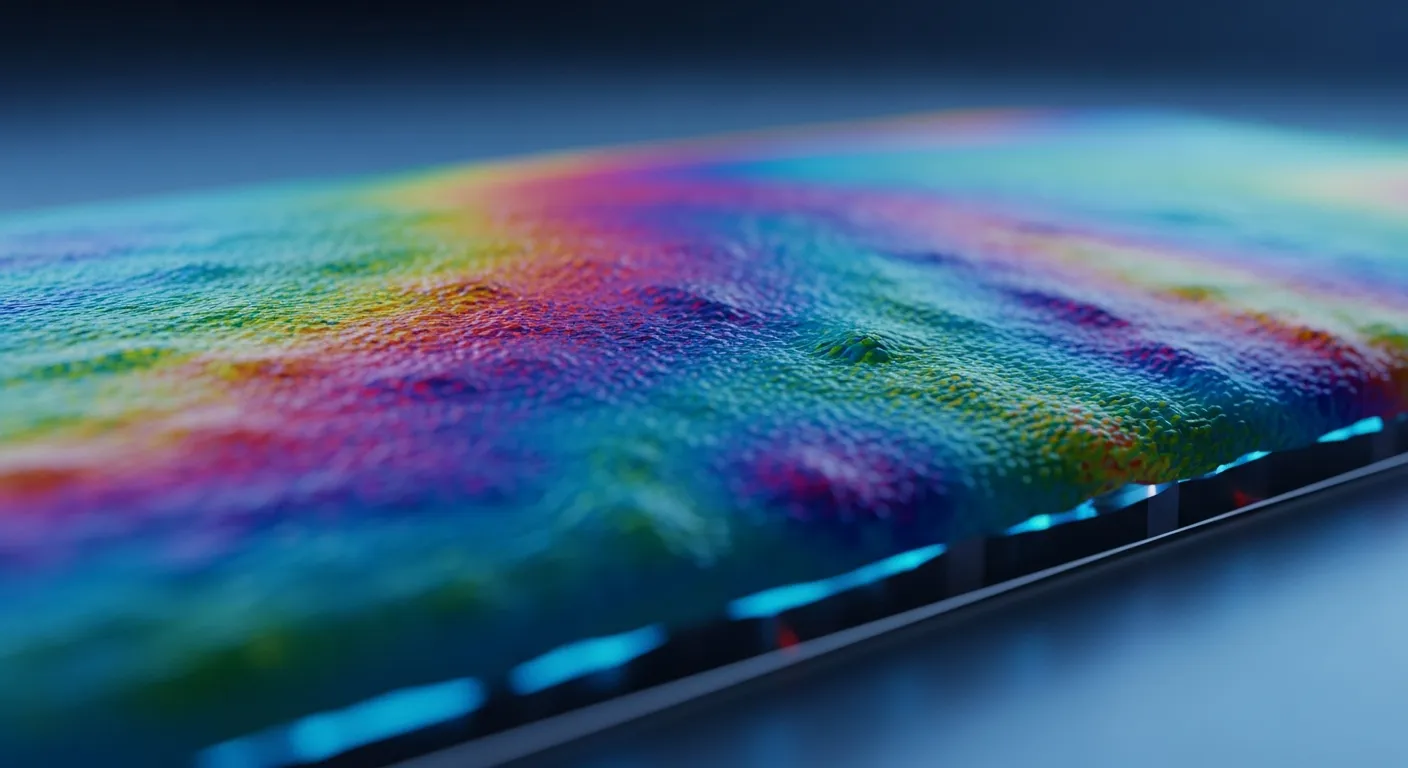
The short version is this: the researchers used a water-responsive polymer film and programmed different parts of it to swell differently. Once water enters the picture, the surface changes shape on a microscopic level. And because tiny changes in shape affect the way light bounces around, the material also changes color and visual finish.
Translation: it is less like paint and more like a tiny stage performance happening on the surface itself.
The wild part is the precision. The material can create details smaller than a human hair. Dry, it looks flat. Wet, it rises into little landscapes and shifting optical tricks. Add the right layers and it can act like a soft photonic skin, meaning it can control how it reflects light in ways normal screens and coatings simply cannot.
Try the vibe yourself
Drag the sliders to mimic the idea behind the material. More hydration changes texture. Different light angles change the color play.
HydrationLight angle
Why this feels like the future
Because octopuses and cuttlefish have been humiliating human engineers for years. These animals do not just swap colors. They can alter the physical texture of their skin so they look like rock, coral, sand, or nightmare fuel. We have had screens, coatings, and camouflage fabrics, sure. But a material that can dynamically shift appearance and topography is a different beast.
This is where it gets fun. The Stanford team says the material could eventually lead to adaptive camouflage for robots, flexible displays, wearable devices, and tiny optical systems that manipulate light in weird beautiful ways. In plain English, your future gadget might not just show a color. It might physically change how its surface behaves.
Imagine a rescue robot that blends into debris to avoid causing panic in wildlife. Imagine clothing that changes sheen and texture based on temperature or surroundings. Imagine a gadget that goes from glossy black to shimmering ocean blue just because the environment changed.
That is not a final product yet. Right now, the material still needs manual tuning with water and solvent. But the researchers are already talking about combining it with computer vision so a system could analyze its surroundings and match them automatically. Which is where this stops sounding like materials science and starts sounding like a deleted scene from the future.
The best part is how accidental it was
My favorite detail is that the breakthrough partly came from a happy lab accident. A researcher reused a polymer sample that had already been exposed to an electron beam, then noticed it behaved differently later. That tiny moment of, "Wait. Why is this doing that?" helped unlock the whole trick.
Science is often sold as giant genius monologues. In reality, a lot of it is careful work, weird observations, and someone being curious enough not to throw away the strange result.
So yes, we are still a long way from a jacket that lets you cosplay as a cephalopod secret agent. But the direction is very real now. A surface that can rise, shimmer, mute itself, and re-pattern on demand is no longer a fantasy prop. It is a lab-built object with a paper in Nature.
And that is the part I cannot get over. Somewhere between octopus skin, nanotechnology, and one very observant grad student, humanity may have just written the opening paragraph of real-life shape-shifting materials.
Source: Stanford University research published in Nature, reported via ScienceDaily on March 31, 2026.